
A typical mid-market brokerage takes 2,000 to 4,000 inbound carrier calls per month, and a meaningful share come outside business hours. If those calls go to voicemail, a percentage convert to lost loads, lost capacity, and lost relationships.
For a concrete reference point: Fura Freight was answering 60% of inbound carrier calls before Ten8 deployed. After deployment, 100%. Average response time on the phone went from 3 minutes to 3 seconds. Full case study at ten8.ai/case-study/fura. The math on covering this volume with humans does not work for most mid-market shops. The math on covering it with AI Coworkers does.
This article walks through how an AI handles inbound carrier calls. What it picks up. What it handles end-to-end. What it routes to humans. And how this changes operations for a brokerage running real volume.
What carriers actually call about
Before getting into the AI side, it helps to know what carriers call brokerages about. The pattern is consistent across mid-market shops:
Capacity inquiries (35-45 percent)
"You got anything in Phoenix tomorrow?" "What's posting outbound from Memphis?" Carriers calling to ask if the brokerage has loads matching their truck's location.
Load follow-ups (20-25 percent)
"I'm picking up at 2 PM, can you confirm the appointment?" "Got the rate con but the address looks wrong." Carriers calling about a load they've already booked.
Calling on a specific posted load
"I saw your Phoenix to Denver load on DAT. Tell me more, what's the rate, and can we work on it?" Carriers reaching out about a specific load to get details and negotiate price.
Payment status (10-15 percent)
"Hey, when does invoice 4421 pay out?" "I haven't gotten paid on the Dallas load yet." Carriers chasing on payment.
MC and rate confirmation requests (8-12 percent)
"Can you resend the rate con for tomorrow's load?" "Where's the lumper receipt from yesterday?" Document requests for items the brokerage owns.
New carrier outreach (5-10 percent)
"I saw your post on DAT. I'm an MC out of San Antonio, want to talk about getting set up." Carriers initiating relationship.
Issue escalations (5-10 percent)
Detention disputes, missed appointments, equipment problems, accidents.
Other (2-5 percent)
Wrong numbers, sales calls, miscellaneous.
The split matters because it tells you which calls the AI can handle end-to-end and which need a human.
What gets handled end-to-end
The AI handles roughly 65 to 75 percent of inbound calls without escalating to a human. The categories that close cleanly:
Capacity inquiries
When a carrier calls asking what's available, the AI pulls up the brokerage's open loads, filters by the carrier's preferences (lane, equipment, rate range, recent location), and offers options.
Carrier: "Yeah, this is Mike with Sterling Trucking, MC 412882. I just dropped in Houston, you got anything heading north?" AI: "Hey Mike. Let me look. Yeah, I've got a Houston to Memphis dry van, picks up tomorrow morning at 8, paying $1,950. Also a Houston to Birmingham reefer if you've got temp control. Which one fits?" Carrier: "Memphis works. Send me the rate con." AI: "Will do. Rate con coming to you on the email we have on file. You good with the standard 8 AM pickup window?"
That's a 90-second call that closes a load. The carrier hangs up, the AI generates the rate confirmation, sends it for signature, and updates the TMS. The operator who would have spent 15 minutes on this call did zero minutes.
Load follow-ups
When a carrier calls about a load they've booked, the AI pulls up the load record. Document requests get fulfilled immediately. Address questions get answered from the load record. Pickup time changes get logged and confirmed with the customer when needed.
Carrier: "It's Dave from Riverway. I'm picking up at noon for the Atlanta load but I don't have my BOL yet." AI: "Got it, Dave. The BOL is generated by the shipper at pickup — it isn't something we issue. I see your pickup is at 12 PM at the Atlanta DC; the shipper will hand you the BOL when you arrive. Want me to send you the rate confirmation and the shipper's site contact in case you need anything before you get there?" Carrier: "Yeah, send me the rate con and the contact."
The operator would have done the same thing in maybe 4 minutes. The AI does it in 60 seconds and never forgets.
Payment status
The AI integrates with the brokerage's accounting system or factoring partner. When a carrier asks about payment, the AI pulls the status and relays it.
Carrier: "Hey, calling about invoice 4421." AI: "Pulling that up. 4421 is a Memphis to Charlotte load you ran on the 8th. Invoice was approved on the 15th and is in the next pay batch, scheduled to release on the 22nd. ACH to the bank we have on file ending 7421." Carrier: "Got it, thanks."
Direct, factual, no waiting on a callback from accounting. Carriers love this.
What gets routed to humans
The categories the AI generally hands off:
Issue escalations and disputes
Detention disputes, claims, missed appointments where customer relationships are at risk, equipment problems requiring judgment. The AI gathers initial information, identifies the right human owner, and routes the call with a context summary.
Carrier: "I sat at the consignee for six hours yesterday. Need to get paid on detention." AI: "I hear you. Let me pull up the load. I see the appointment was for 2 PM and you arrived at 1:50, departed at 8:15. That's 6 hours and 25 minutes of dwell. Detention starts after 2 hours per the rate con, so you'd be eligible for 4 hours and 25 minutes at $50 per hour, totaling $221.25. I'm going to flag this to Sam, the rep who handled the load. He'll review and get back to you within 4 hours. You good with that?"
The AI doesn't promise the detention payment. It surfaces the math and routes it to the right human. The carrier feels heard and the rep gets the issue with full context.
New carrier onboarding
For carriers initiating onboarding from inbound, the AI gathers basic info (MC number, equipment type, lanes of interest), runs the initial fraud and authority check, and either continues the onboarding flow or routes the carrier to a sales rep depending on the brokerage's preferences.
Anything off-script
If the carrier asks something the AI doesn't have a confident answer for, it routes the call. Better to escalate than confidently answer wrong.
Carriers who explicitly want a human
Some carriers will say "I want to talk to a person." The AI hands off without resistance.
What the handoff looks like
When the AI routes a call to a human, two things happen.
Synchronous handoff (when reps are on)
If a rep is on-shift and available, the AI conferences them in. The AI gives a 15-second context summary directly to the rep ("Mike from Sterling, calling about detention on load 4421, eligible for 4.5 hours, total $221.25, looking for resolution") and the rep takes over.
Asynchronous handoff (after hours or rep unavailable)
A task gets created in the rep's queue with the carrier's contact info, the call recording, the structured information the AI captured, and a recommended next action. When the rep starts their shift, they have the full context. They can call the carrier back without rebuilding the situation.
The asynchronous handoff is what makes 24/7 inbound coverage actually work. The carrier doesn't get a callback during their shift, but they get a callback faster than they would if they'd called a brokerage that didn't pick up at all.
What this looks like in operations
Before AI inbound coverage, a typical mid-market brokerage:
- Picks up a meaningful but incomplete share of inbound during business hours. Fura specifically was at 60%.
- Misses essentially all after-hours inbound.
- Voicemails get triaged the next morning, often hours late.
- Some carriers do not leave voicemails — they call the next broker on their list.
After AI inbound coverage (Fura pattern):
- Pickup rate hits 100% across all hours.
- A large share of calls is handled end-to-end without human involvement — the routine capacity, document, and payment inquiries.
- The rest routes to a human operator with full context.
- Average response time on the phone went from 3 minutes to 3 seconds.
Operational changes for the rep team
A few things shift when inbound coverage flips on.
Voicemail backlog disappears
The morning ritual of triaging 30 voicemails goes away. Reps start their day on actual work, not catch-up.
After-hours stops bleeding
The Saturday morning emergencies and the 10 PM carrier escalations get handled when they happen, not 12 hours later. Customers stop hearing "we'll have to follow up Monday" on Friday-night problems.
Carrier perception improves
Carriers tell us, when we ask, that they appreciate not getting a voicemail. They feel respected when their call is picked up and acknowledged, even when the actual issue gets routed to a human for resolution.
Reps focus on harder work
The reps who used to spend 90 minutes a day on inbound capacity inquiries (most of which were not productive) get that 90 minutes back for customer reviews, lane strategy, and the relationships that matter.
Common operator concerns
Three concerns we hear most often when brokerage owners consider this.
"Carriers will hate talking to AI"
Some carriers prefer humans. Most don't care once the call is productive. Carriers' main complaint about brokerage phone systems is being on hold or hitting voicemail. AI fixes both. The voice quality on modern models is good enough that carriers often don't realize it's not a human until the call closes.
"What if the AI says something wrong"
Recordings and transcripts are available for every call. Error rates on routine flows (capacity, document, payment) are very low. On edge cases, the AI escalates rather than guessing. The handoff design is what keeps quality high.
"We can't trust an AI with our top carriers"
Reasonable concern. Most platforms let you flag specific carriers for human-only handling. A handful of strategic carriers always go to humans, even on inbound. The AI handles the volume, the rep team handles the strategic relationships.
What it costs
The honest answer depends on the pricing model the vendor uses. Most platforms in the category bill platform fee plus voice usage — for a brokerage taking 3,000 inbound calls per month, that typically lands in the $1,500–$3,500 per month range in voice metering, on top of whatever platform fee the vendor charges. You pay whether the call resolves or not.
Ten8 prices differently. Outcome-based: you pay per result the AI delivers. No platform fee, no per-minute fee, no upfront cost.
Where this goes
Inbound coverage will become a baseline expectation for brokerages by 2028. Carriers will increasingly choose to do business with brokerages that pick up versus brokerages that don't. The brokerages that move now build a coverage habit that compounds into carrier preference.
If you want to see what AI inbound coverage looks like on your operation, book a demo. We'll set up a sandbox number for testing in about two weeks, before any production traffic.
Keep reading

Carrier identity fraud: the brokers defense playbook
Carrier identity fraud and double brokering cost the freight industry an estimated $700M+ a year, and the patterns have evolved faster than most brokerages' defenses. Here is the full playbook for detecting, blocking, and recovering.
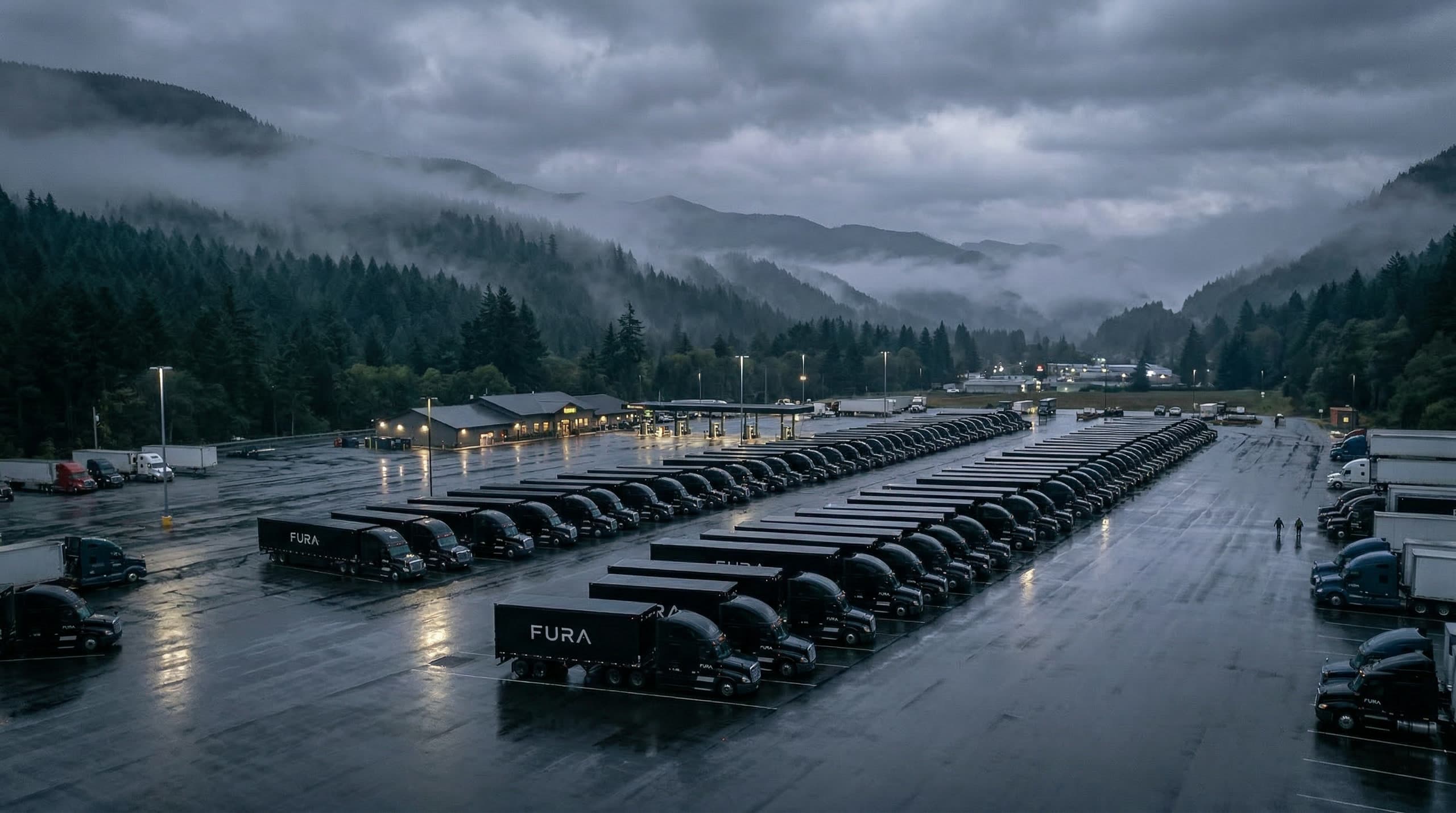
How Fura Freight answered 100% of carrier calls without adding headcount
Fura Freight runs 5,000+ shipments a month across 16,000 carriers. They were answering 60% of inbound carrier calls. Here is what changed when Ten8 deployed across voice, email, and Teams.

Carrier fraud is getting worse. Here's how we catch it
Double brokering, identity theft, and ghost carriers cost the freight industry billions. Automated vetting catches patterns humans miss.